
Day 5: Yes, Networking.
SOMETIMES, RESUMES & COVER LETTERS DON’T MATTER
Today’s goal is…
To learn how connections help in Production roles.
Gear Check:
• The Prod Camp Code on Networking
• What-Do-I-Say Template
5.1: Networking is a Must
NO, YOU ARE NOT ANNOYING
Kicking us off by busting one of the most prevalent myths there is.
If you think asking for help is bothering, that is a MYTH.
Here are 3 reasons why:
-
Everyone has ideas worth sharing no matter our level of experience —and sometimes, that spawns from the questions we ask.
-
Most people LOVE to help —whether they realize it or not. It’s a chance to share their strengths or in some way, make a difference.
Being able to support someone else often times is what fulfillment is.
-
More often than not, it’s through helping others or seeking help where we build bonds that come naturally and less “forced.”
Put it this way, it’s a lot more natural to ask for help than to ask your supervisor if they want to go bowling with you for team morale, haha.
NETWORKING ISN’T JUST ABOUT ASKING FOR HELP
Now that we’ve covered the biggest blocker for why people don’t reach out to others, here are other reasons why networking is a must.
-
LinkedIn is a lot more influential than you may think:
Some recruiters go straight to LinkedIn profiles.
Some folks in the hiring team don’t always have access to your resume or cover letter right away. Maybe someone mentioned your name, and the quickest way to find out about them is through LinkedIn.
Some people don’t have time to read your resume and cover letter and would prefer to skim through your LinkedIn profile’s experience.
SO THE LESSON HERE?
Connect with colleagues or professionals you meet in real life.
There is no shame in the Open to Work banner. It’s just communication.
LinkedIn profiles SHOULD be updated and match your resume.
Arguably, I’d prioritize updating your LinkedIn profile FIRST before writing cover letters or applying to jobs online.
-
I have a recent anecdote on this in today’s Campfire Stories, but TLDR: you are bound to run into people in the industry again. Be it at a new studio, a work event, a grocery store, or through suggestions on social media.
Nurturing connections is worth it because it’s through REconnection where unexpected support sometimes lie. And sometimes, that leads to a job ;]
Everyone wins when we support each other.
The world can use a little less competition and a little more collaboration.
A little less self-caring and a little more caring for others.
5.2: Networking Etiquette and Best Practices
PROD TIPS FOR NETWORKING
✓ Tailor your LinkedIn profile with keywords highlighting production tasks/duties, even if your title is different from what you’re applying for.
✓ Engaging with recruiters’ posts makes your name recognizable. This helps your name be more memorable when you apply or get your connection invites accepted.
✓ Connect with artists and supervisors too, not just Prod.
✓ Not all jobs are posted. Connections help you get early tips!
✓ When you get introduced to someone, add them on LinkedIn right away (with a note) while they still remember you.
✓ Be authentic. Even if your authentic self is awkward.
Sometimes, it’s endearing; people are kind and will give you grace.
✓ Let recruiters or your referrals know when you’re no longer available.
-
Introduce yourself, be clear, and be concise when starting a conversation. If you’re requesting a meeting, be purposeful and keep it under 30mins unless explicitly agreed upon otherwise.
Be on time and stick to the agreed time. -
People are more than “what they can do for you.”
Get to know them and appreciate other ways you can learn from them. Ask thoughtful questions.
-
Mind that disrespect is not the same as discomfort. Disengage if you are threatened or are feeling unsafe.
Otherwise, be willing to listen even when ideas differ. -
Notice that it’s not about “I will not be afraid to ask.”
Being scared, nervous, and anxious are all normal. Ask anyway. -
It’s a common issue for job seekers right now to be ghosted, and understandably, it’s frustrating, hurtful, and just wrong. It’s a disrespect of people's time. But having been ghosted does not give you license to do it to others. Stay respectful and communicate professionally.
-
Always send a thank you message after someone gives you their time or shares insight that you found helpful. Keep it professional.
-
No matter how far you are in your career, no matter your experience, there will always be someone who’s closer to where you were than where you are now. Someone who’s earlier in their career who can benefit from your insight and experience. You have value.
Reach out to others & be the help you wish you had.
PROD TIP: It’s a small thing, but may not be for others:
spell and pronounce people’s names correctly.
5.3: How to Reach Out, Connect, and Follow Up
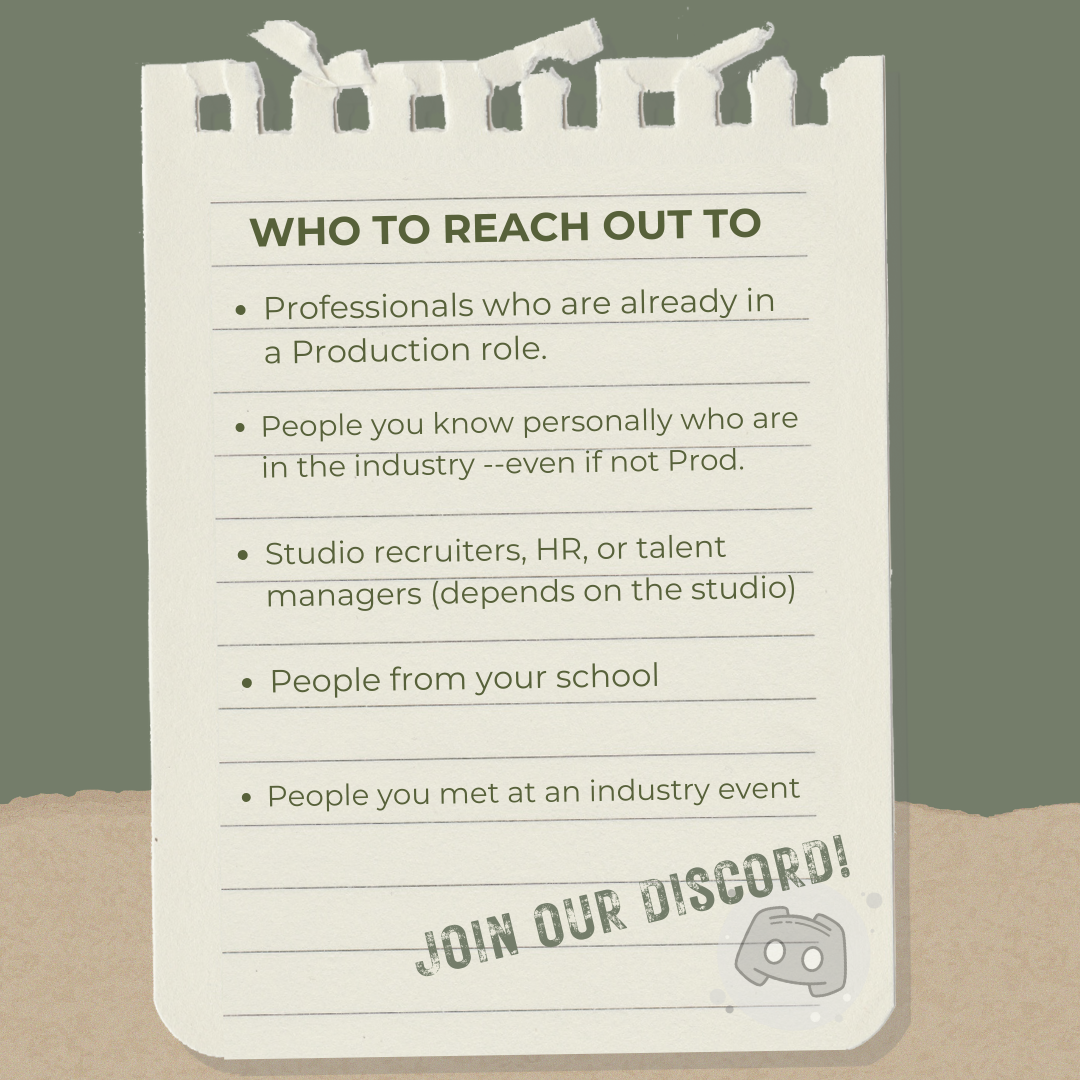
As a socially awkward person myself, here are some tips that helped me.
-
Hi [ Name ],
I [ how you knew them ] and I [ how they helped you or what you thought of it ].
I’m [ who you are ] and I [ what you’re currently doing ]. I would love to [ your request ].
[ If you have mutuals, let them know and how that’s relevant here. ]
[ sign off ]
—
PROD TIP: Keep it short. 4-5 sentences. Your request or question should be very easy to answer.
-
Hi [ Name ],
Just wanted to follow up on [ the thing ] . Totally understand if now is not a good time, [ offer an alternative time or form of communication ].
[ Thank them and let them know how their advice/work helped. ]
[ sign off ]
Connection is a habit, not a hustle.
REMINDER:
Notes are based on your Camp Leader’s own experience and are not necessarily the only possible approach.
This course is just a guide and an example, not a bible.
Instead of thinking of networking as a “must do” in job search, think of it more as a chance to create genuine connection.
5.4: Make LinkedIn Work For You
WHAT HIRING TEAMS LOOK FOR
✓ Past employers and your role.
✓ Career progression.
✓ Relevant responsibilities to the current job opening.
Like a resume, keywords matching the position matter here too.
✓ A reminder note on who you are and where you met.
Don’t just blindly add people. Take the extra step and add a note. It will increase the chance of the invite getting accepted.
DID YOU KNOW?
Hiring teams often ask someone internally about a candidate if they know that they’ve previously worked together. This is also another reason why networking and healthy work relationships are important.
-
See Ch 5.3 above.
-
Yes. Again, send the invite with a note.
-
Check with them what they’re comfortable with.
Not everyone in your personal contact may be keen on discussing work in their personal devices or contact info. So, it’s best to check with them.
-
See sample template in Ch 5.3 above.
-
Ask them what they’re comfortable with.
-
Thank them and engage with their posts online. Reach out again every few months if you have any update.
Don’t bombard them with questions just to keep a “conversation” going. If it’s not flowing naturally, give them space.
“If you want to go fast, go alone. If you want to go far, go together.”
-
Relevant tips for production. Click on the number for more info.
—
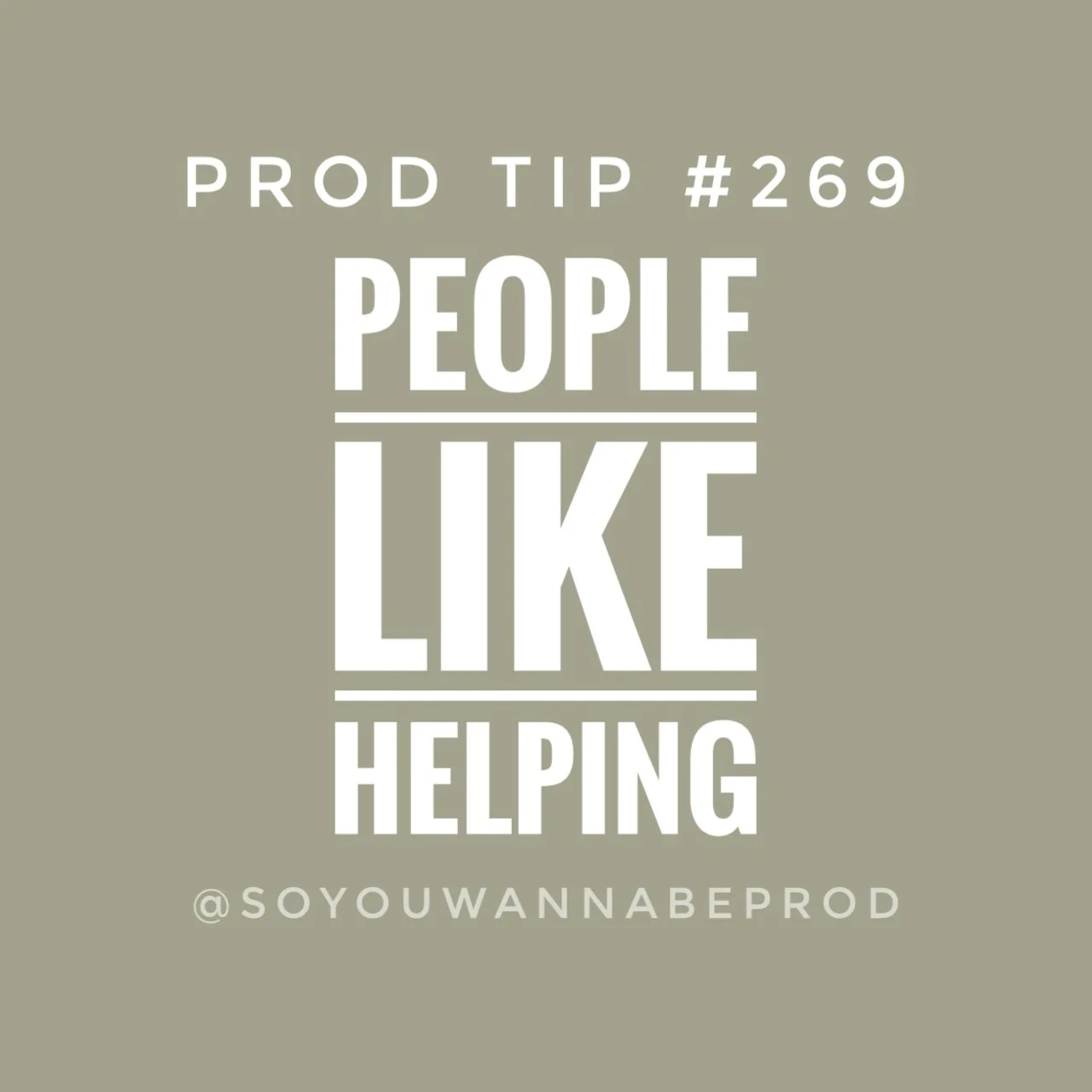
#269: People like helping.
#293: Connect with your colleagues on LinkedIn WHILE you still work together. While they still know who you are.
#305: Always thank people who refer you.TIP: Networking isn’t just about asking for help. Sometimes, it’s nurturing connections.
TIP: When meeting someone, stick to the agreed time.
TIP: Be brief but warm when reaching out to others for the first time.TIP: It’s a small thing, but may not be for others: spell and pronounce people’s names correctly.
TIP: Tailor your LinkedIn profile with keywords highlighting production tasks/duties, even if your title is different from what you’re applying for.
TIP: Engaging with recruiters’ posts makes your name recognizable. This helps your name be more memorable when you apply or get your connection invites accepted.TIP: Connect with artists and supervisors too, not just Prod.
TIP: Not all jobs are posted. Connections help you get early tips!
TIP: When you get introduced to someone, add them on LinkedIn right away (with a note) while they still remember you.TIP: Be authentic. Even if your authentic self is awkward.
Sometimes, it’s endearing; people are kind and will give you grace.
TIP: Let recruiters or your referrals know when you’re no longer available.TIP: Keep your initial chat short. 4-5 sentences. Your request or question should be very easy to answer.
TIP: Always add a note to your LinkedIn invite. -
Anecdotes from the real life.
—
I am also very awkward in social situations. Just look how cringey some of my vlogs are, haha. What helped me the most to get over it (even for only short moments) is actually deliberately putting myself in social situations.
Once, there was a recruiter who greeted me with his own name by mistake. So, it’s not just you who’s awkward sometimes ;)
Does anyone else get super anxious about shaking other people’s hands? Like it’s a test and you’re just praying not to squish, twist, hit, clasp in a weird way??? Me every time.
Please. Don’t just start and end with “how are you?” You can write a more thoughtful message than that.
I once met up with someone to discuss a collab work…and they brought their mom. With whom through our conversation seemed to be… setting us up? Aha.
—
These are not so “scary” but worth a share.
I once have been head hunted for a job because I had work friends who recommended me internally. Sharing not to toot my own horn but as an example that your work relationships are a form of networking too that can lead to future opportunities.
In the last industry event I was in, I personally ran into about 50 people that I did not currently work with, but have worked with once or twice in past projects or studios. This was an event of at least 10 000 people. So, maybe 50 was not a lot in comparison, but the point is, 50 people to just “run into” is a lot of people to have known personally, but one that would not have been possible without building connections beforehand. The power of networking may not be apparent on the spot as you get to know people, but it definitely comes back. For me, catching up with them even briefly made the conference more fun and a lot less intimidating (hello, I am a short little lady in a traditionally male-dominated industry, but that’s a topic for another time), I was introduced to recruiters that I had not met before, it lead to a couple of interviews, and by the following week, I got a job. :D
-
Here are the main takeaways from today’s camp.
You are not annoying someone by asking for help.
Networking is more than asking what others can do for you.
Networking doesn’t have to be pushy or invasive as long as you’re respectful of other people’s time, value, and boundaries.
Always thank people who help you.
You have more connections than you think.
LinkedIn is a powerful tool. Use it.
-
SOY is not affiliated with the external links below, but these references are listed here in case they may be helpful to others.
—
LinkedIn 101 series by Andi Schuler, andi_creates_
Videos by Erin McGoff, Advice with Erin
Videos by Emily Yakashiro, A Course in Production
Vanessa Van Edwards
Cues - book (this is an affiliate link)
—
GUIDED TRAIL - COME WALK WITH ME!
Got any questions or unsure about what to do or say? Ask us live in The Prod Chat here.
Action Items:
No. 1: Add me on LinkedIn remember to add a note to the invite.
Optional: Introduce yourself in The Prod Chat.